Middle Eastern Women’s Rights Must Be a Priority in The 21st Century
- Gigi Israel
- Dec 14, 2020
- 3 min read

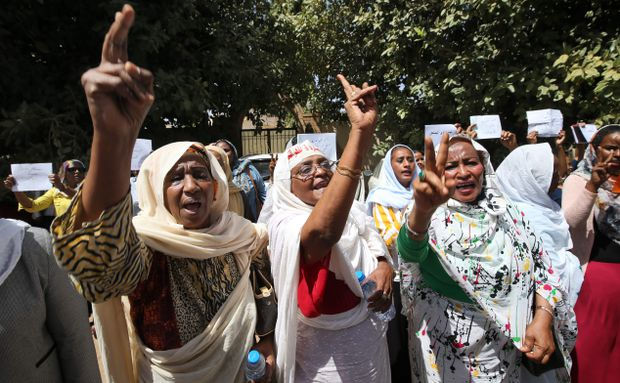
The full participation of women in civil society is considered dangerous in many countries, especially in countries that adhere to the Sharia Law ideal, where women lack basic human rights and the ability to speak truth to power. While advocating for these rights, many women in Middle Eastern countries have been beaten, sexually abused, imprisoned or killed in an attempt to silence their demand for human dignity. The pandemic has exponentiated the challenges faced by these courageous women.
In Middle Eastern countries, courts and the society still act to restrict women’s rights in both economic and political areas. These restrictions include limitations on women’s free movement as well as on rights to choose a spouse, divorce, and maintain child custody after a divorce. A lack of enforcement of women’s economic rights, including women’s rights to inheritance, land, and control over income, is so pervasive that women’s economic independence is often not tolerated at the community level. Women’s rights could be at an even greater risk in the future. Their already limited public role has been reduced further in response to the increasing number of attacks (both physical and political) on women who participate publicly. A number of high profile women were assassinated in the Middle East in recent years. Throughout the Middle East, conservative politicians have been using Sharia Law arguments to attack women’s rights supporters and eliminate women’s achievements in an attempt to resist further progress on women’s rights.

To summarize some key issues facing women in Middle Eastern countries include:
Lack of equal legal rights
Limitations on economic opportunity
Increased exploitation and physical and mental abuse
Vulnerability to being radicalized by terrorist extremist groups
Increased exposure to COVID-19
What Can You Do?
We owe it to women of all generations to right these wrongs and offer the same opportunities for all women that men have enjoyed for centuries. It’s going to take a concerted effort against entrenched belief systems that are founded in Sharia Law. These horrific situations that women in these countries experience on a daily basis has become so ingrained in the Middle East that the constant exposure through social media and ultimately international sanctioning are the only paths to eliminating these atrocities. As we have seen with the #MeToo and Black Lives Matter movements, enough pressure can be generated in support of changing long-held beliefs. Changing centuries old philosophies and laws in another region can be difficult, but it is incredibly important. A strong social media campaign could pressure American politicians to support women’s rights in the Middle East.
Many different organizations are supporting women’s rights in the Middle East. Organizations like Center of Arab Women for Training and Research, The Association for the Development and Enhancement of Women, and Women's Islamic Initiative in Spirituality and Equality are all great organizations to support.
Sources:
Al Jazeera. “UK Report Calls out Saudi Arabia over Women's Rights Abuses.” Middle East | Al Jazeera, Al Jazeera, 12 Nov. 2020, www.aljazeera.com/news/2020/11/12/uk-report-calls-out-saudi-arabia-over-womens-rights-abuses.
Alkhudary, Taif. “Iraqi Women Are Engaged in a Struggle for Their Rights.” Middle East Centre, 15 June 2020, blogs.lse.ac.uk/mec/2020/06/15/iraqi-women-are-engaged-in-a-struggle-for-their-rights/.
Congressional Research Service. Women in the Middle East and North Africa: Issues for Congress. 19 June 2020, www.justice.gov/eoir/page/file/1287981/download.
Hozyainova, Anastasiya. “Sharia and Women’s Rights in Afghanistan.” United States Institute of Peace, May 2014, www.usip.org/sites/default/files/SR347-Sharia_and_Women%E2%80%99s_Rights_in_Afghanistan.pdf.
Khan, Sheema. “Opinion: We Must Listen to Women's Warnings about the Middle East.” The Globe and Mail, 21 May 2020, www.theglobeandmail.com/opinion/article-we-must-listen-to-womens-warnings-about-the-middle-east/.
Zayadin, Hiba. “Saudi Women Are Speaking Up Online.” Human Rights Watch, 28 Oct. 2020, www.hrw.org/news/2020/04/14/saudi-women-are-speaking-online.

Comments